Nov 23, 2025
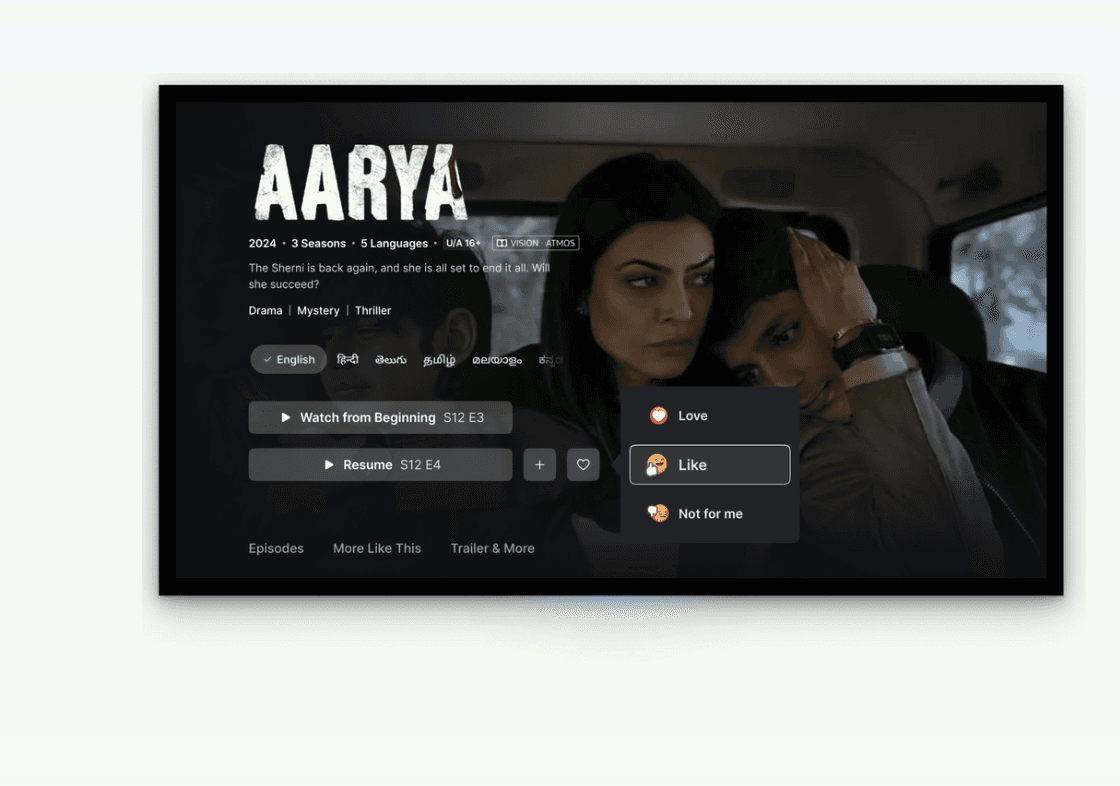
Personalisation is a tough nut to crack. Despite having one of the largest curated media libraries in the world, we continue to tune how personalisation can work better for our customers. Here, we discuss how customer input forms a key component in making better recommendations and how we set about asking you, our customer, to help us make a real connection with you, for your content.
The “Content Paradox” Problem
Despite offering over 7000 content pieces in 11 languages, 30+ genres and channels on JioHotstar, we have repeatedly received feedback from our customers that there is not enough relevant content for them. This indicates a disconnect between the product and the users, and shows that JioHotstar needs to understand people’s taste better.
The Core Issue
Our recommendation algorithm was making educated guesses based on watch time, not actual enjoyment.
Think about it, how many times have you watched a series to its bitter end, or finished a movie just to see how badly it could end? Take a look at this example:
Shreya binged an entire season of a drama series and even though she didn’t like it much, she ended up finishing it just to know the ending. She doesn’t want to watch any more TV series like this one again though.
In such a scenario, the recommendation system will take their watch time as a positive signal, assume that the person liked the content and will suggest similar content to them not fully understanding if the person actually enjoyed it or not.
The Problem Statement
To solve this and understand our customers better, we needed to explicitly understand what they like and dislike, which leads us to our problem statement:
How might we enable customers to meaningfully express their content reactions so they receive better recommendations and develop deeper platform engagement?
Let’s dig into this problem statement and focus on the key problems to solve:
Expression: How can people meaningfully communicate their feelings?
Encouragement: How do we motivate authentic feedback?
Investment: How do we create lasting engagement through quick wins?
What do people want to express?
We started by studying how people naturally talk about content. You know that moment when your group chat goes off after someone watches something amazing (or hilariously terrible)?
“This is cinema!” → Pure love and recommendation-worthy
“It was fine, I guess” → Lukewarm, forgettable
“Meh, not really my thing” → Personal preference, not necessarily bad
“What did I just watch?!” → Strong dislike, avoid similar content
“I’m obsessed!” → Rewatchable, share with friends
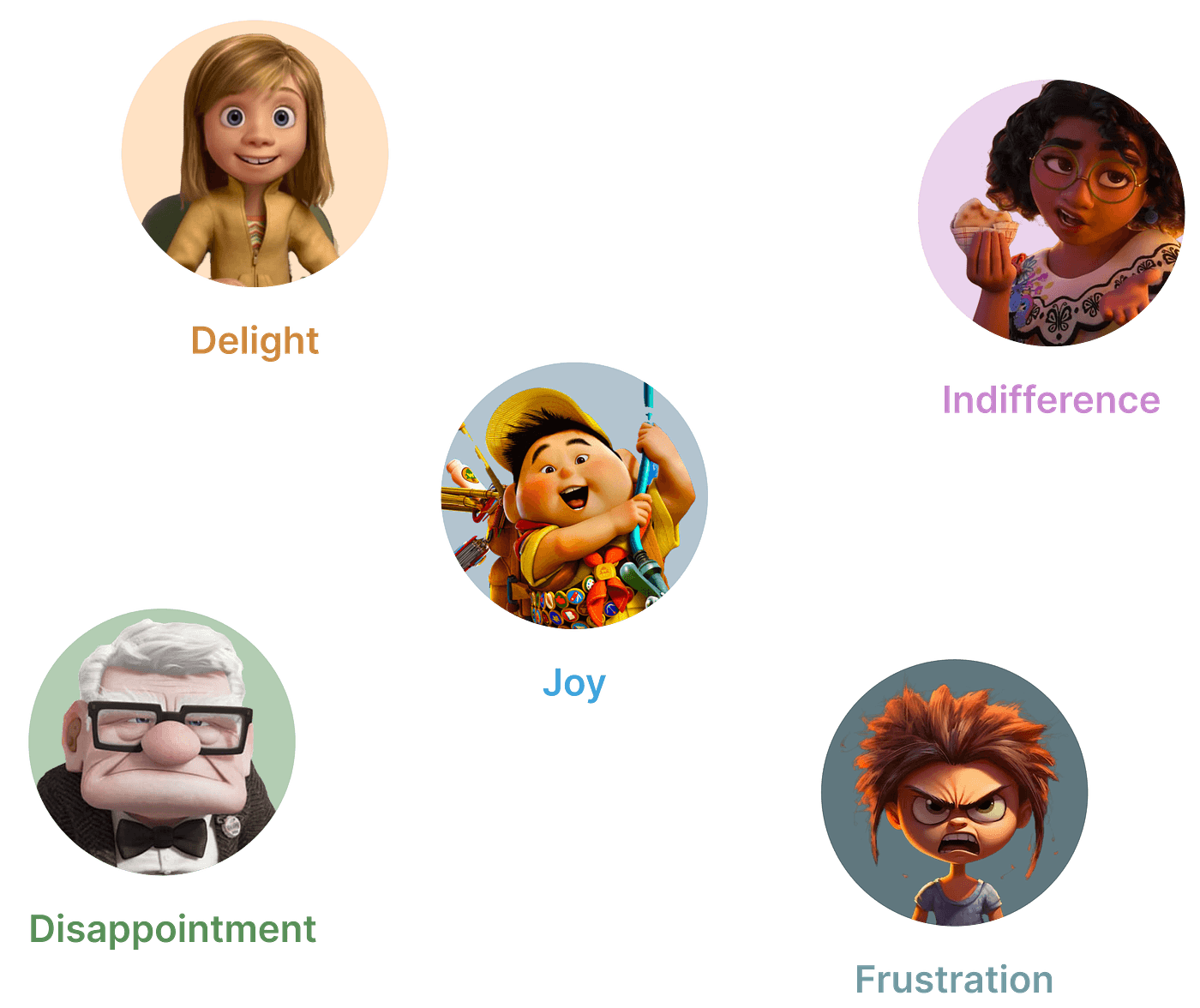
The emotional spectrums we discovered
How can they meaningfully express these signals?
Before diving into the designs, we uncovered a crucial pattern in how people actually discover content:
People often find new shows and movies based on what their friends and social circle are watching and liking
Viewers also gravitate towards content trays like ‘Latest and Trending’ or the ‘Top 10’ list which highlight popular content among other users.
Social validation plays a crucial role in discovering and deciding what to watch.
All this social validation was happening outside JioHotstar. We were losing the most powerful recommendation engine: peer influence, to WhatsApp groups and Instagram stories.
The breakthrough realisation: If we could capture these social signals on our platform, we wouldn’t just improve individual recommendations, we’d create a network effect where every user’s feedback improves everyone else’s experience.
This social insight fundamentally changed our design approach. We needed something that felt like talking to a friend, not filling out a survey.
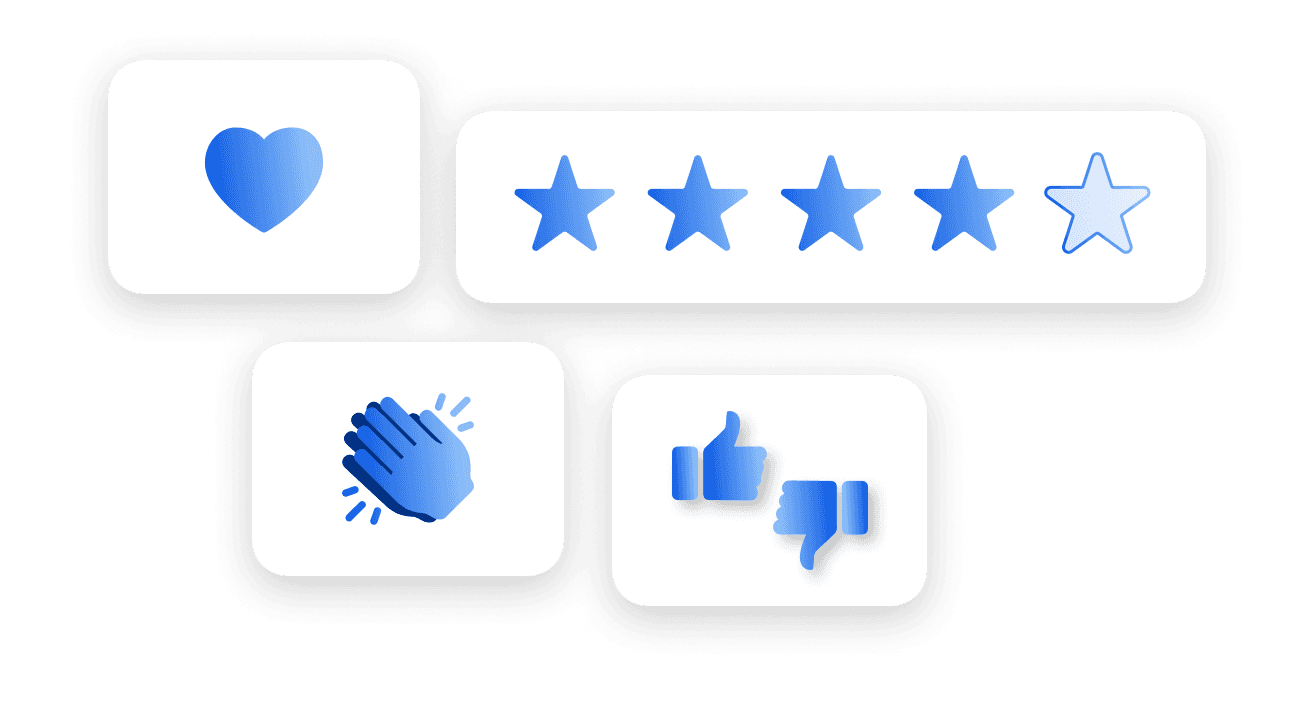
Star ratings? Too clinical, they’re for critics writing reviews, not friends sharing opinions.
Thumbs up/down? Too binary, doesn’t capture the nuance of “it was well-made but not my taste.”
Text reviews? Too effortful, most people don’t have the time to write paragraphs, they react.
Emoji reactions? They mirror exactly how people communicate about content naturally:
Emotionally expressive → Just like your WhatsApp reactions
Universally understood → No language barriers in emotional expression
Low cognitive load → One tap, like reacting to a friend’s story
Socially familiar → Feels like every other social platform you use
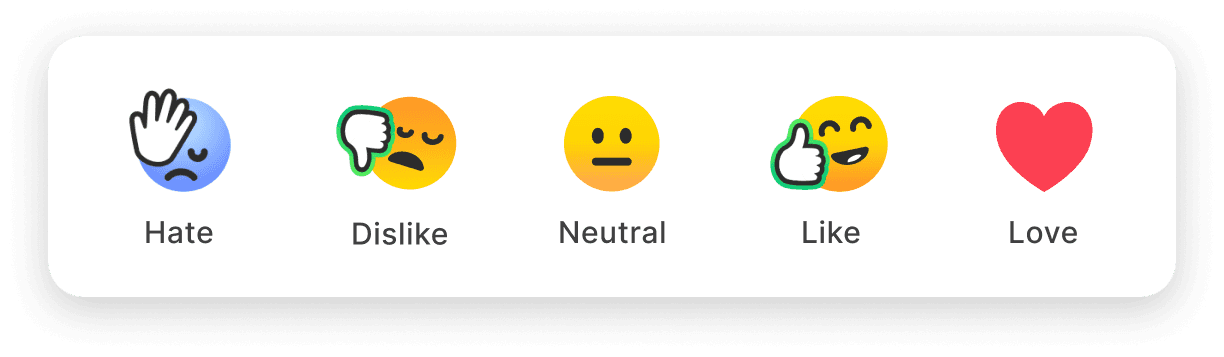
So, emoji reactions seemed like the right choice and we settled on 5 emojis for people to express their reactions to a content. This is the first iteration we tested with our users:
The User Testing Reality Check
Until now, we were designing based on insights from secondary research and our intuition of what felt right for the users. This is where our user research team came in. The nuanced insights we gathered through the user study made us revisit our decisions:
FOMO: “If I select ‘Hate’, will I miss out on similar good content?” Users were hesitant about the Hate reaction, fearing that this would remove all similar recommendations.
Word extremity: Words like ‘Hate’ felt too harsh for a bad movie, and discouraged them from rating the content negatively even if they didn’t like the content.
Decision paralysis: ‘Neutral’ became an easy way out for users when they were unsure or didn’t want to think. It didn’t lead to concrete inputs for us to improve their recommendations.
Based on these insights, we narrowed it down to three well-understood options:
Love- More like this, recommend to similar users
Like- Decent content, mild positive signal
Dislike- Personal taste mismatch, no judgment on quality
After finalising the three reactions, something still felt off. The term ‘Dislike’ seemed too strong and might deter users from selecting it.
We began brainstorming for a better alternative. After considering options like ‘Boring,’ ‘Pass,’ and ‘Meh, ‘Not for me’ seemed like the best choice. It conveyed a personal preference without being too strong. The copy matters as much as the functionality.
Our Final Trio
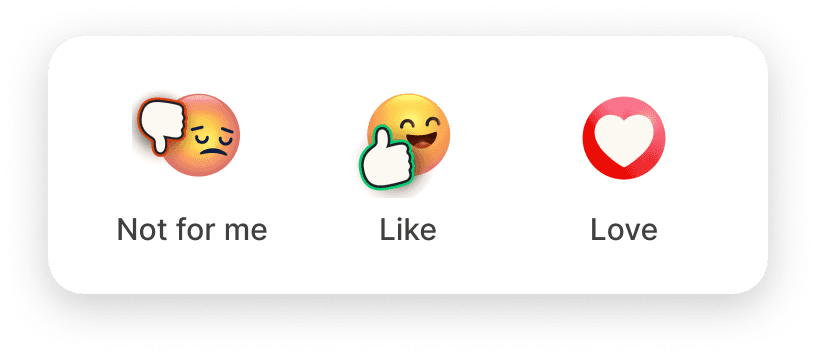
Now that we have our perfect star-cast, let’s move on to the second part of the problem statement:
How might we encourage and enable customers to meaningfully express these reactions?
To encourage and enable customers, it is crucial to answer the question:
When and How to ask for Rating?
People open JioHotstar to sit back and relax so asking them to rate shouldn’t be a hindrance in users’ journeys or feel like an extra task to them.
Core principle: Prompt naturally, never interrupt the entertainment experience. How can we ensure we follow this key principle and position these reactions?
Our Three-Point Strategy
1. Post-Content Prompt (Primary)
Right when credits roll, emotions are fresh, context is clear, no interruption to the next choice.

2. Content Detail Page (Persistent and Deterministic)
Always available for second thoughts or delayed reactions.

3. Homepage Gentle Reminder (Recovery)
Unobtrusive nudge for missed opportunities: “How did you feel about that show you watched last night?”
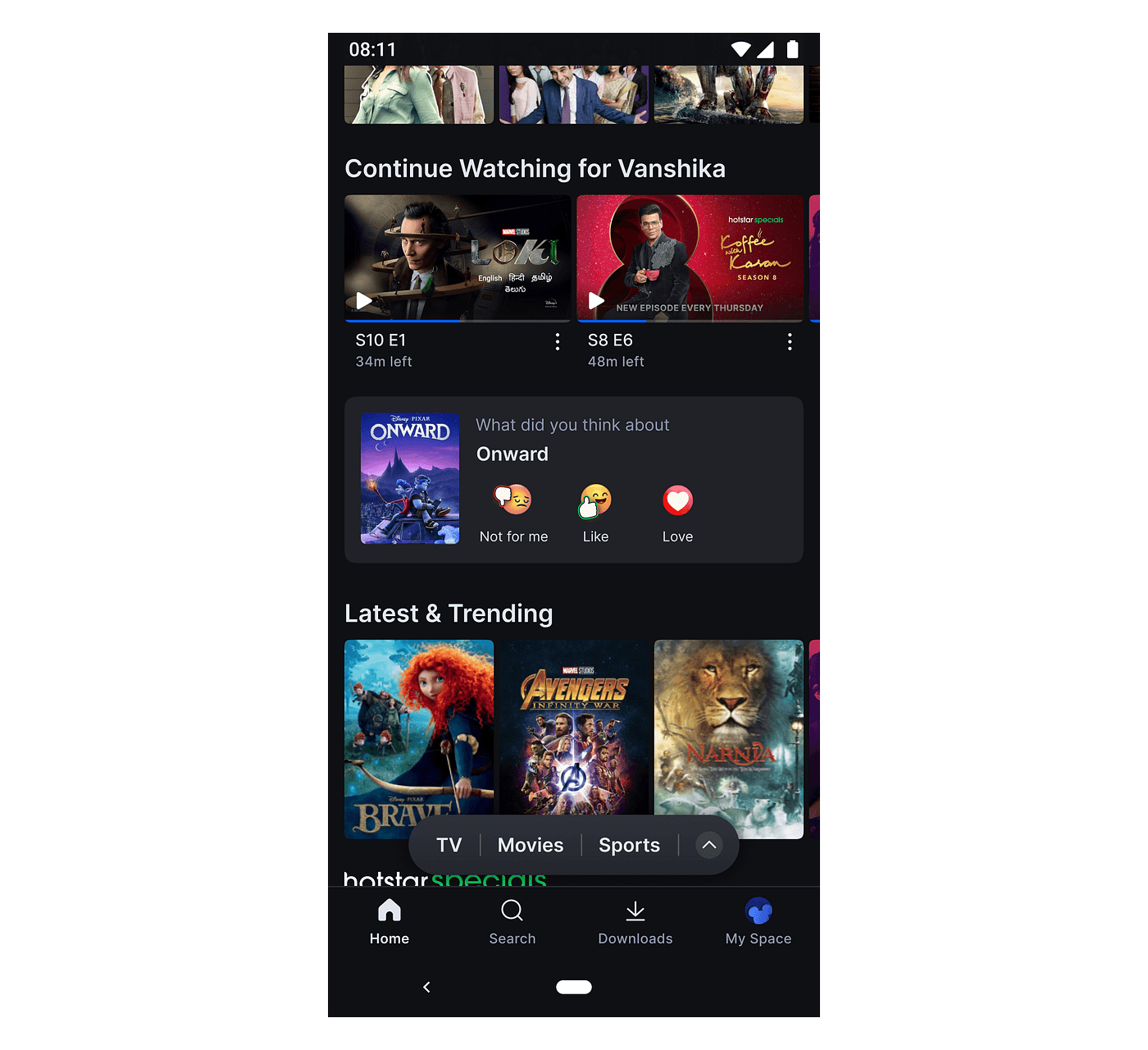
The Magic of Micro-Interactions
Animation helps in building user attention and curiosity while creating a sense of delight. Each emoji needed a personality that felt human and delightful.
Working with our team of motion designers we iterated on:
Eye expressions that convey genuine emotion
Subtle movements that feel natural, not robotic
Animation timing that feels responsive, not laggy
We iterated continuously on every element until we were able to achieve this:

Since it was important that the rating prompt can’t be obtrusive at all and shouldn’t hinder user’s other flows, it became even more crucial to grab users’ attention with subtle animations so they discover the feature easily.

Closing the Loop with Quick Wins
When we talk about retention, that is, encouraging customers to interact with the feature repeatedly, we need to keep in mind what value our customers are getting from it and how to clearly communicate these benefits to them bringing us to the third part of the problem statement:
How might we help our customers to build a deeper investment in the product
Showing content based on users’ ratings can make them feel that Hotstar is already listening to them, providing immediate reward. Once users rate a content, they see a content tray on the homepage, featuring content similar to what they reacted positively to, called the “Because You Loved” tray.
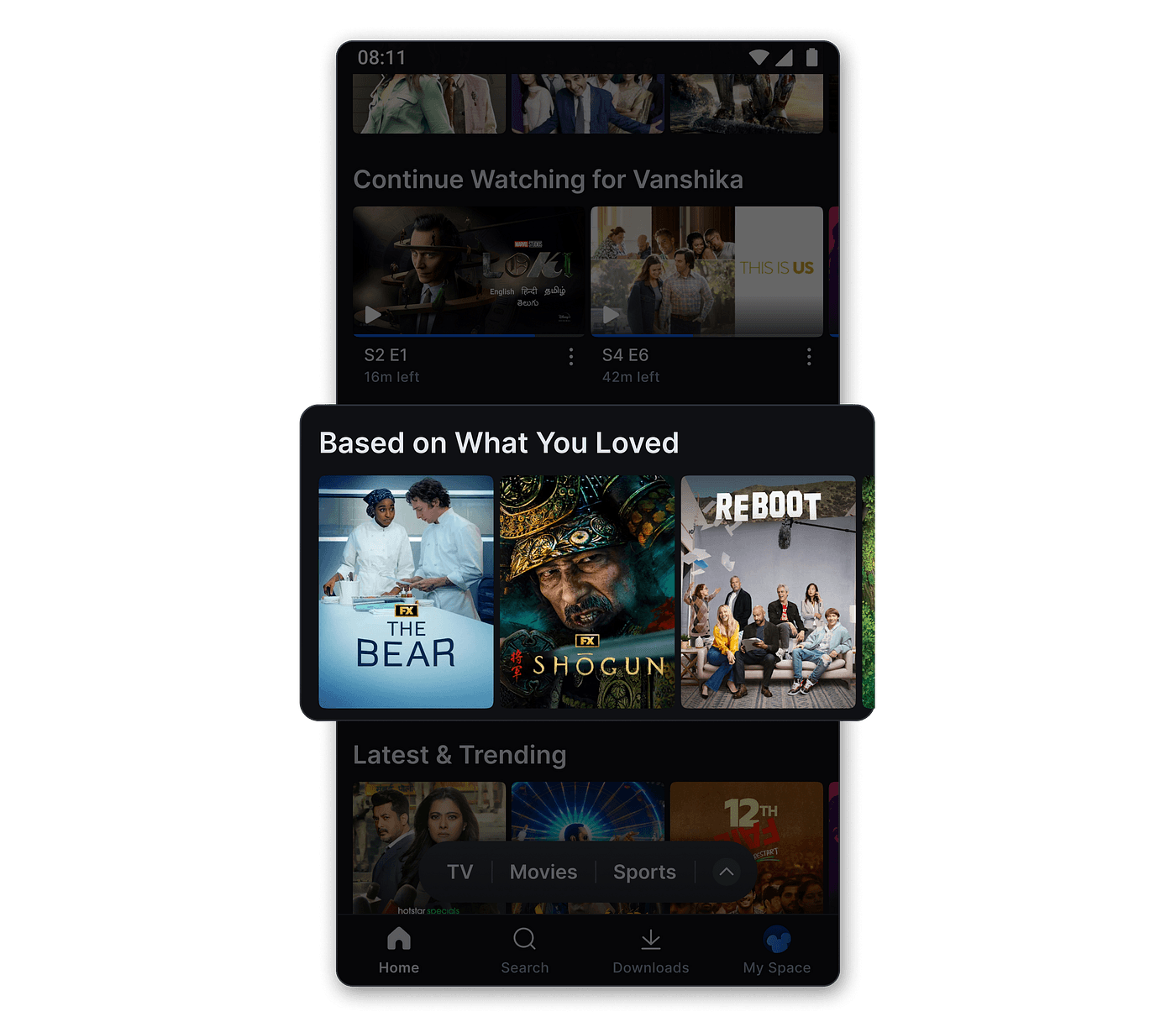
When users see their ratings translate to better content suggestions within hours, they understand the value exchange and engage more.
The Impact
Adoption Beyond Expectations
We initially assumed getting users to take actions outside their primary entertainment flow would be challenging. We were wrong. When people experienced tangible quick wins, like improved recommendations, they willingly engaged with the rating feature.
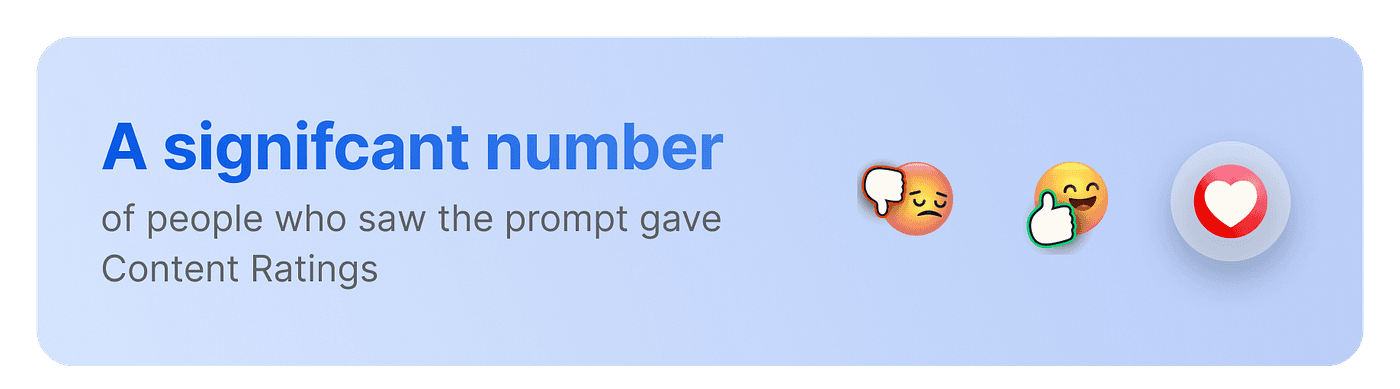
The Trust-Engagement Loop: Users who rated content showed meaningful engagement with the “Because You Loved” tray, proving the value exchange was working. This created a virtuous cycle: better ratings → better recommendations → more rating behavior.
Content Discovery Transformation: Users who embraced rating began exploring substantially more diverse content titles, moving beyond their typical viewing patterns. The platform successfully broke them out of content silos.

Quality Engagement Increase: People who rated content spent significantly more time watching content per session, indicating they were finding genuinely engaging content.
Platform-Wide Impact: The individual behavior changes aggregated into meaningful platform improvements, validating that better individual recommendations create better overall user experiences.

On an entertainment platform where people come to relax, asking for feedback seemed counterintuitive but they experienced delight and immediate personal value which helped build rating habits.